theology

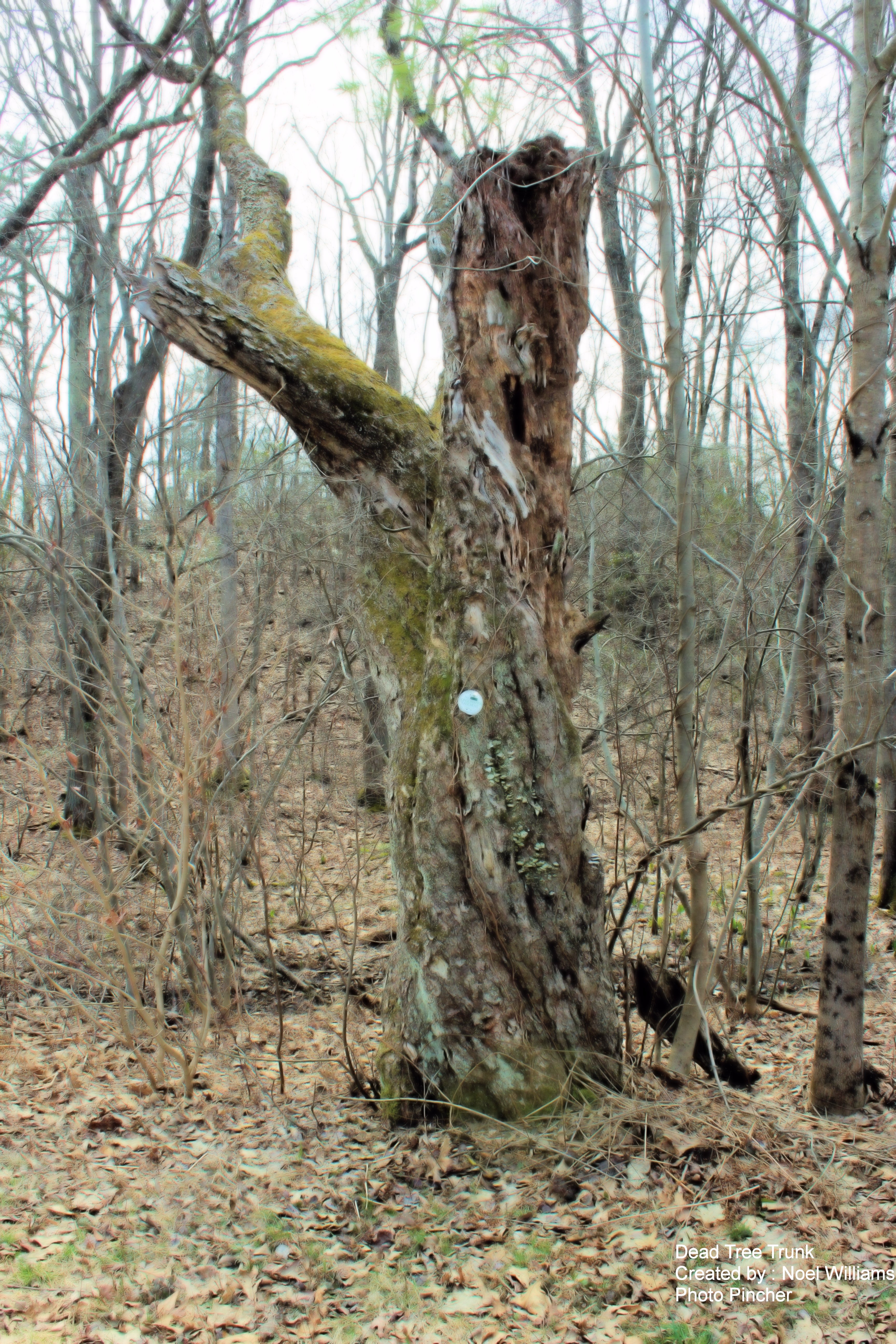
Do you have a thorn in your flesh?


012

Everybody has a thorn in the flesh. One that you desperately want to remove. Ironically, you have asked God to take it away several times, but nothing happens. It seems God did not hear you. So, you begin to wonder whether He is listening to you at all. Before long doubt and fear set in and you find yourself going backward instead of forward.

Let me be clear, a persistent thorn in the flesh is not a sign that your heavenly father does not care about your well-being, neither does it mean that He did not hear your request. However, It could mean that He has already acted upon your request, but you have refused to accept His proposal. It could also mean that the thorn is the execution stake you need to pick up daily to follow Jesus.

The Apostle Paul struggled with a thorn in his flesh too. He had petitioned God to remove the thorn three times, but every time he did, the answer was always the same, “My grace is enough for you”, (Read 2 Corinthians 12:9). Of course, like all of us who suffered from thorns in our flesh, the beloved Apostle, was not happy with the answer God gave him, but after three, tries he realized he was fighting a losing battle.

Therefore, brothers and sisters, as I reflect on the thorn in my flesh, I am reminded with absolute assurance that the closer I get to God is the less concerned I am about a thorn in my flesh. Further, the thorn in my flesh may be one thing that keep me grounded, resolute and steadfast in pressing toward the mark for the prize of the high calling of God in Christ.

I am adopted into God’s family


 There is an old fable that goes like this: “From the poor house to king’s house”. That is kind of what the apostle Paul meant when he said, “You are no longer a slave, but God’s child; and since you are His child, God has made you also an heir” Galatians 4:7).  

Since the fall of man in the Garden of Eden, God’s eternal plan has always been to adopt us into His family. He does this by bringing us to Himself through Jesus Christ. The Bible tells us that He finds immense pleasure doing this, (Read Ephesians 1:5). That is the reason He sent Jesus to break the Yoke that binds us.

I thank God that I am not desperate, alone, insecure, unwanted and without an identity. I am an heir of God and co-heir with Christ. God has adopted me into His family because He wants me to be a part of His own. He wants me to have the same rights and privileges that belong to a son who has come into His inheritance.

I am not the outsider, the world thinks I am. I am a child of a King who owns everything. I have His love, attention, presence, acceptance, and His name. I own what He owns. His riches are mine, His other children are my brothers and sisters and His home is where I belong.

He is not here, He is risen, just as He said


Scripture Reference:  Matthew 28:1-20; Mark 16:1-20; Luke 24:1-49; John 20:1-21:25.

After the Romans had crucified Jesus, Joseph of Arimathea had Christ‘s body placed in his own tomb. A large stone covered the entrance and soldiers guarded the sealed tomb. On the third day, a Sunday, some women (Mary Magdalene, Mary the mother of James, Joanna and Salome are all mentioned in the gospel accounts) went to the tomb at dawn to anoint the body of Jesus.

bth_easter-empty-tomb[1]

A powerful earthquake took place as an angel from heaven rolled the stone back. The guards shook in fear as the angel, dressed in bright white, sat upon the stone. The angel announced to the women that Jesus was no longer in the tomb, “He has risen, just as he said.” Then he instructed the women to check the tomb and see for themselves. Next he told them to go tell the disciples. 

With a mixture of fear and joy they ran to obey the angel’s command, but suddenly Jesus met them on their way. They fell at his feet and worshiped him. Jesus then said to them, “Do not be afraid. Go tell my brothers to go to Galilee. There they will see me.”

When the guards reported what had happened to the chief priests, they bribed the soldiers with a large sum of money, telling them to lie and say that the disciples had stolen the body in the night.

After his resurrection, Jesus appeared to the women near the tomb and afterwards at least twice to the disciples while they had gathered at a house in prayer. He visited two of the disciples on the road to Emmaus, and he also appeared at the Sea of Galilee while some of the disciples were fishing.

Pilate granted the crowd’s wish and ordered Jesus’ crucifixion


Pilate looked out over the crowd. So, it had come to this. He thought. People who usually had no use for him were now coming to him, looking for him to pass judgment on one of their own. It was exhilarating to have such power. With one word he could bestow life or death.

At every Passover Festival, the Roman governor was in the habit of setting free any one prisoner the crowd asked for.  At that time, there was a well-known prisoner named Jesus Barabbas. So, when the crowd gathered, Pilate asked them, “Who do you want me to set free for you? Jesus Barabbas or Jesus called the Messiah?” He knew jolly well that the Jewish authorities had handed Jesus over to him because they were jealous.

images[5]

While Pilate was sitting in the judgment hall, his wife sent him a message: “Have nothing to do with that innocent man, because in a dream last night I suffered much on account of him.”

The chief priests and the elders persuaded the crowd to ask Pilate to set Barabbas free and have Jesus put to death. But Pilate asked the crowd, “Which one of these two do you want me to set free for you?”

“Barabbas!” they answered.

“What, then, shall I do with Jesus called the Messiah?” Pilate asked them.

Crucify him!” they all answered.

But Pilate asked, “What crime has he committed?”

Then they started shouting at the top of their voices: “Crucify him!”

When Pilate saw that it was no use to go on but that a riot might break out, he took some water, washed his hands in front of the crowd, and said, “I am not responsible for the death of this man! This is your doing!”

The whole crowd answered, “Let the responsibility for his death fall on us and on our children!”

Pilate then set Barabbas free for them, and after he had Jesus whipped, he handed him over to be crucified (Matthew 27:15-26).


Palm Sunday or Passion Sunday?


Sunday, March 24th is Palm Sunday in Christian tradition. Today Christians all over the world celebrate the day Jesus entered the city of Jerusalem on a donkey to shouts of, “Hosanna to the Son of David! Blessed is he who comes in the name of the Lord! Hosanna in the highest!”

For many Christian churches, Palm Sunday, often referred to as “Passion Sunday,” marks the beginning of Holy Week, which concludes on Easter Sunday. Today is call Palm Sunday because the crowds covered Jesus’ path with branches of palm leaves as He rode by on the donkey. It was a joyous welcome.stdas0760[1]

The biblical account of Palm Sunday can be found in Matthew 21:1-11; Mark 11:1-11; Luke 19:28-44; and John 12:12-19.

Matthew 21:1-11
As they approached Jerusalem and came to Bethphage on the Mount of Olives, Jesus sent two disciples, saying to them, “Go to the village ahead of you, and at once you will find a donkey tied there, with her colt by her. Untie them and bring them to me. If anyone says anything to you, say that the Lord needs them, and he will send them right away.”

This took place to fulfill what (Zechariah 9:9) the prophet foretold five hundred years earlier.

“Say to Daughter Zion, ‘See, your king comes to you, gentle and riding on a donkey, and on a colt, the foal of a donkey.’”

The disciples went and did as Jesus had instructed them. They brought the donkey and the colt and placed their cloaks on them for Jesus to sit on. An extremely large crowd spread their cloaks on the road while others cut branches from the trees and spread them on the road. The crowds that went ahead of him and those that followed shouted

“Hosanna to the Son of David!”

“Blessed is he who comes in the name of the Lord!”

“Hosanna in the highest heaven!”

When Jesus entered Jerusalem, the city got stirred up and asked, “Who is this?”

The crowds answered, “This is Jesus, the prophet from Nazareth in Galilee.”